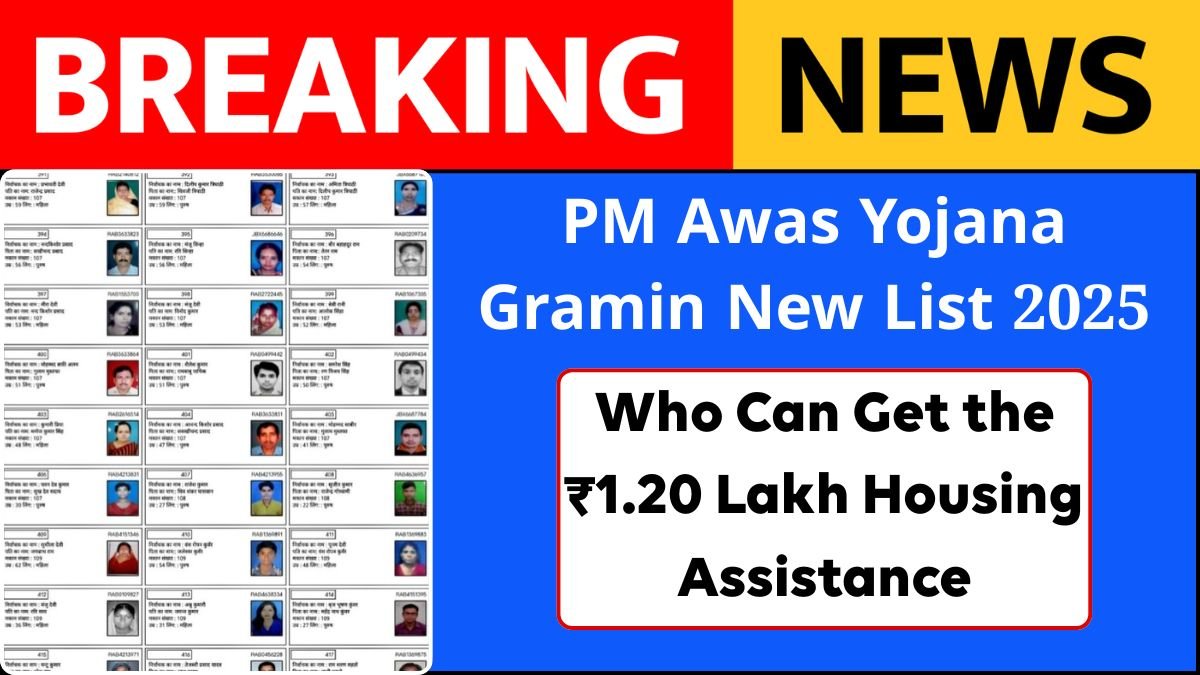
If you’ve spent years living under a tin roof, patching walls every monsoon, or worrying about where your family will take shelter during heavy rains, this update matters to you. The PM Awas Yojana Gramin New List 2025 has been released, and for lakhs of rural families, it’s more than just a government announcement. It’s the possibility of a safe, permanent home—something many people have waited for their entire lives.
For villages across India, housing has always been the missing piece. Roads came. Electricity came. Toilets came. But a solid roof? That often stayed a dream. The 2025 PMAY-G list feels different because it’s based on fresh surveys, stricter verification, and renewed pressure to reach genuinely deserving families.
Let’s break it down calmly and clearly, so you know exactly what this means for you or someone you care about.
What Is PM Awas Yojana Gramin and Why the 2025 List Is Crucial
The PM Awas Yojana Gramin (PMAY-G) is the central government’s effort to ensure that no rural family is left without a proper house. Under this scheme, eligible households receive financial assistance of up to ₹1.20 lakh to build a pucca home.
What makes the PM Awas Yojana Gramin New List 2025 so important is timing and intent. After pandemic delays, migration shifts, and long-standing complaints about exclusions, the government carried out updated data checks. Panchayat-level verification played a bigger role this time, which means fewer random names and more focus on families actually living in kutcha or unsafe homes.
Who Can Get the ₹1.20 Lakh Housing Assistance
If your name appears in the PM Awas Yojana Gramin New List 2025, you become eligible for ₹1.20 lakh in housing support. This amount isn’t given all at once. It’s released in stages, directly into your bank account, based on construction progress.
This structure exists for a reason. It ensures the money is actually used to build the house, not lost in between. And there’s more to it than just the core amount.
Many beneficiaries also receive linked support, such as wages through MGNREGA during construction and help for toilets under the Swachh Bharat Mission. When these pieces come together, the result isn’t just four walls—it’s a livable home with dignity.
How to Check Your Name in the PM Awas Yojana Gramin New List 2025
Earlier, people had to depend entirely on local offices, middlemen, or rumors. Today, things are more transparent. The PMAY-G portal allows anyone to check the beneficiary list by selecting their state, district, block, and gram panchayat.
This digital access has reduced confusion and favoritism. Families can see for themselves whether they’re included. That said, reality on the ground is mixed. Internet access is still weak in many villages, and not everyone knows how to navigate online portals.
Why the 2025 PMAY-G List Feels Different from Earlier Years
The PM Awas Yojana Gramin has existed for years, but demand has always been higher than supply. Population growth and economic stress made things worse. The 2025 list tries to address these gaps by including families identified through updated socio-economic data.
Unlike earlier updates, officials focused more on removing ineligible names while protecting genuinely homeless families from being left out. Geo-tagging of houses, installment-based payments, and stricter monitoring have improved outcomes.
Is it perfect? No. Construction costs have risen sharply, and in some regions, ₹1.20 lakh still feels tight. A few states have added extra assistance, but support varies. Even then, most experts agree the quality of houses built under PMAY-G today is far better than what older schemes delivered.
How PMAY-G Compares to Older Rural Housing Schemes
Before PMAY-G, schemes like Indira Awaas Yojana struggled with delays and weak oversight. Houses were sanctioned on paper but never completed properly. Monitoring was loose, and accountability was rare.
PMAY-G changed that mindset. The 2025 implementation shows clearer timelines, better tracking, and stronger verification. Houses are designed to suit local climate conditions, and fund release is tied to visible progress.
What this really means is simple: fewer half-built structures and more homes people can actually live in.
What Experts Say About Rural Housing After the 2025 Update
Housing experts see the PM Awas Yojana Gramin New List 2025 as a sign that rural housing is finally being treated as core infrastructure, not charity. Policy analyst R.K. Sharma explains that a permanent home changes everything—health choices, education outcomes, and even how families plan their future.
A stable house gives people the confidence to invest in their children, save money, and think beyond survival. Going forward, experts expect more focus on climate-resilient construction and faster fund releases.
